




Your Starts Here
Continuing & Professional Education
Extended Campus at The University of Texas at Austin connects you with leading faculty at one of the nation's top public universities. Our programs are built on outstanding academic research and are designed to equip you with immediately relevant, career-advancing skills.
I Am
Interested In...
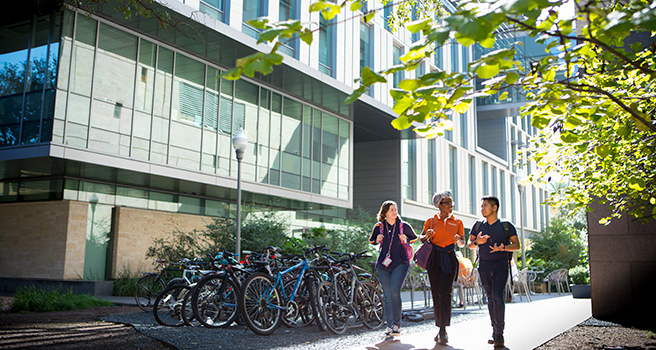
Explore Areas of Interest
Drawing on expertise from across the university, we offer programs for professionals seeking to advance in or enter a wide array of industries and fields.










Something For Everyone
Whether you are an accomplished engineer looking to dive into cutting-edge research, an entrepreneur seeking to grow your digital marketing aptitude, or a high school administrator aiming to boost your people leadership skills, we’ve got a program for you.
Why Extended Campus?
Flexibility, Access, Expertise
From one-day courses to master’s and doctoral degrees, Extended Campus at UT Austin provides you with access to innovative education programs at one of the world’s top universities.
Program Spotlight
Design, Develop, and Manage IT solutions.
The Master of Science in Information Technology and Management (MSITM) program prepares tomorrow’s IT leaders through hands-on experiences with programming and building with tech. Learn how specific technologies like blockchain, IoT and machine learning work, and how to use them to solve business problems.
As an interdisciplinary tech and business program, the MSITM provides the tools to grow and lead in a rapidly evolving field.
Learn more
Program Spotlight
Looking for a fun, rewarding career while living abroad? Teaching English as a foreign language may be your opportunity.
UT Austin’s English Language Center offers CELTA certification, the gold standard in this field. Focusing on practical techniques like face-to-face teaching practice with English language learners and classroom observation of experienced teachers, you can develop transferable workplace skills. If you’re new to teaching or want to develop your classroom skills further, CELTA is the certification you need.

Student Spotlight
As a first-generation college student, Ri Aldrige understands how important access and equity are in education. After teaching for ten years, Ri pursued her Master’s in Learning Technologies at UT.
During her studies, she pursued the Learning, Equity, Action and Design (LEAD) Graduate Certificate. Her LEAD coursework built upon her expertise as a teacher, curriculum designer and teacher educator by focusing on how educators can use technology to enhance every student’s learning experience, regardless of their background.
Ri now serves as the Director of Curriculum and Evaluation for over 15 YMCA programs in Kentucky and Ohio.
Learn more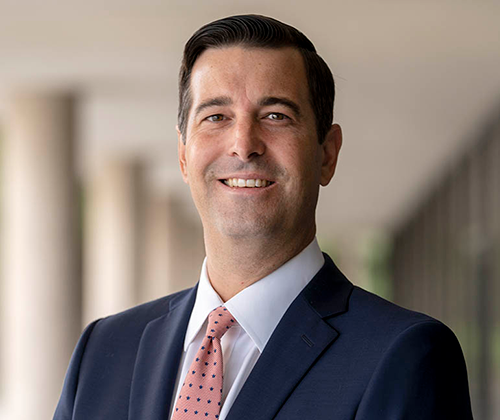
Student Spotlight
After working in the public and private sectors for almost two decades, Ryan Abrose knew a Master’s degree would be key to advancing his career and becoming a more effective leader.
Executive Master of Public Leadership (EMPL)
Now the Vice President of Government Relations for the largest non-profit health system in Southeast Texas, Ryan’s leadership is more impactful than ever before. He leverages the skills and experience he gained from EMPL every day to lead stakeholders while navigating the fast-changing healthcare industry.

Program Spotlight
Ready to Explore Your Next Chapter? The TOWER Fellows Program offers an exceptional, personalized experience for a small community of accomplished individuals.
This two-semester program offers inspiring discussions with world-class thinkers and doers, access to the best courses and professors on campus, and a backstage pass to the best events and programs the University has to offer. The TOWER Fellows Program seeks participants who are eager to pause, think, and create a new, enriching professional and personal journey for the next stage of life.
Learn moreEvents &
Important Dates
Executive Master of Public Leadership Information Session
4/24/2024Events &
Important Dates
MARK YOUR CALENDAR
Heart Galleries of Texas Webinar: Effective Programs and Approaches in Adoption
CELTA Certificate in Teaching English to Speakers of Other Languages Information Session
Still Can’t Find What You’re Looking For?

FREQUENTLY ASKED QUESTIONS
View common questions related to continuing and professional education at UT Austin.
See FAQs
STAY CONNECTED
Join our mailing list to receive updates, event invitations, and new program announcements.
Learn More
University Resources & Lifelong Learning
Take advantage of UT Austin’s many opportunities for personal and professional growth.
Learn More
FREQUENTLY ASKED QUESTIONS
View common questions related to continuing and professional education at UT Austin.
See FAQs
STAY CONNECTED
Join our mailing list to receive updates, event invitations, and new program announcements.
Learn More
University Resources & Lifelong Learning
Take advantage of UT Austin’s many opportunities for personal and professional growth.
Learn More