Thursday, August 6, 2009
Field work on the moon (well, Canada)
Marc Airhart from the Jackson School of Geosciences sends this:
For more than 10 years, scientists interested in the exploration of the moon and Mars have visited an ancient impact crater in the Canadian high arctic that they say resembles some craters found on these other worlds.Video of Mark Helper at Haughton-Mars Project
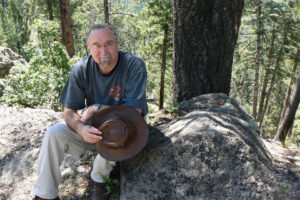
Mark Helper, a geologist at The University of Texas as Austin’s Department of Geological Sciences, recently returned from summer field work at Haughton Crater where he and his colleagues simulated a moon mission. It’s just one small part of NASA’s plan, dubbed Constellation, to return humans to the moon and eventually to Mars.
It’s been 37 years since humans last set foot on the moon. Back then, astronauts typically spent three days on the lunar surface. This time around, the plans call for people to spend several months. The extra time will allow them to carry out much more sophisticated geological research and gain experience in extended stays in space that will be invaluable for multi-year missions to Mars.
The Department of Geological Sciences has a long history of helping train astronauts for space missions. Bill Muehlberger, now an emeritus professor, trained astronauts for Apollo 15, 16 and 17. He took them on geological field trips to sites around the Western U.S. including impact craters and volcanic areas. Later, he and Pat Dickerson, a research fellow in the Department, helped train shuttle astronauts in how to interpret geological features seen from low Earth orbit.