Monday, August 10, 2009
Before college, students do real research: Part 2
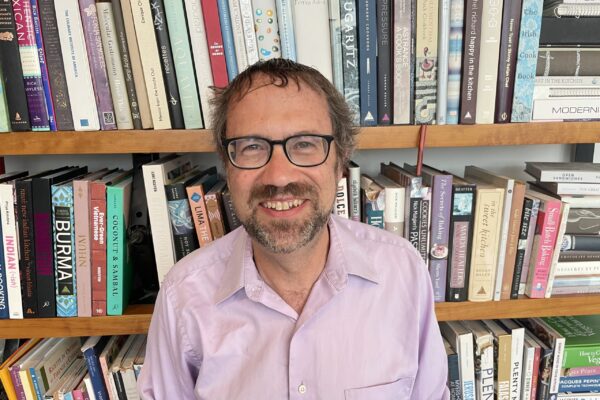
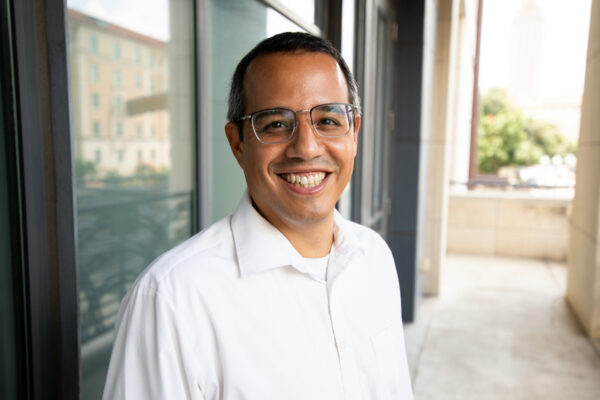
Now Kanish Mehta, who also will start the the university in the fall semester, shares his thoughts about the program.
Mehta graduated from Anderson High School. His supervisor in the ARL:UT program is Trevor Garner, a research associate in ARL:UT’s Space and Geophysics Laboratory. Mehta’s project is Investigating the Morphology of the Ionosphere above the Eastern Mediterranean Sea.
Here’s what he had to say:
I was placed in an office with two honors scholars also under the same supervisor. The three of us worked on similar projects, which allowed us to bounce information and ideas of one another.
With no experience with the Linux operating system, I began my apprenticeship learning how to code in Linux. My supervisor taught me some of the basic commands, and I received help from one of my office mates. I also learned how to use IDL (interface description language) for my work.
Using this knowledge, I started to process data from Coherent Ionospheric Doppler Receivers (CIDRs) in the Ionospheric Tomography Network of Egypt (ITNE). Coherent Ionospheric Doppler Receivers are radio receivers that tune to VHF (150 MHz) and UHF (400 MHz) signals from low-Earth-orbiting (LEO) satellites.
CIDRs observe the Doppler shift in UHF and VHF signals from LEO radio beacons. The Doppler shift is caused by a change in frequency from the satellite’s movement across the CIDR as well as ionospheric time delay. These measurements are received by the CIDR at a rate of 1 kHz.
The Doppler shifts are derived to calculate the change in TEC and integrated to compute relative slant TEC measurements. TEC is the total electron content along the path of a signal and have become the most abundant set of data available to ionospheric scientists. Slant TEC is the total electron content across the line-of-sight between the CIDR and the satellite. Vertical TEC is an adjusted TEC measurement that uses a correction factor to remove the effect of the elevation angle.
The ITNE seeks to understand the structure of the Earth’s ionosphere near the magnetic equator. I processed the TEC data taken from a CIDR in the ITNE, and created plots of the data using IDL. Then, I analyzed the plots in order to find plasma structures in the Earth’s ionosphere.
Throughout the summer, I had weekly one-hour meetings with my supervisor to discuss the work I had done each week and any interesting findings in the data that I had found. I also attended weekly classes on the ionosphere that were taught by my supervisor. This helped me obtain a good understanding on what my work was used for as well as information that would help enhance my abilities on my project.
I found my work at ARL:UT very interesting, and I had an enjoyable time working with my fellow interns.