Tuesday, March 9, 2010

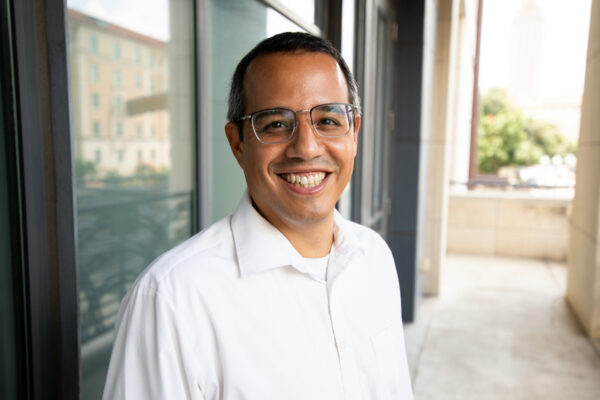
Stan Watowich, World Community Grid user
The
World Community Grid (WCG) now has a half-million users dedicating the unused power of their personal computers—and bigger computers, in some cases—to solving pressing scientific questions.
A story on the Web site of the Texas Advanced Computing Center (TACC), which donates cycles from one of its high-performance computers to the WCG, looks at the WCG and how it works.
The story highlights the research of Stan Watowich, an associate professor of Biochemistry at The University of Texas Medical Branch.
His research, “Developing Dengue Drugs – Together,” is a World Community Grid project supported by TACC. The project seeks to find drug-like molecules that will be effective at stopping the replication of dengue, West Nile, and hepatitis C viruses, all of which share structurally-similar enzymes.
IBM Corp. is the WCG’s corporate sponsor, donating hardware, software, technical services and expertise to build and maintain it.
Share this post:
These icons link to social bookmarking sites where readers can share and discover new Web pages.
This entry was posted on Tuesday, March 9th, 2010 at 3:19 pm and is filed under Supercomputing.
You can follow any responses to this entry through the RSS 2.0 feed.
You can leave a response, or trackback from your own site.
Please note: To view any linked or
embedded video content directly in your browser, you must first download the Adobe Flash plug-in
for your browser. To view any linked PDF files, you must
first download the
Adobe Reader plug-in for your browser.
Tags: dengue, research, Texas Advanced Computing Center, Watowich, World Community Grid
By Tim Green
Published at 3:19 PM |
Post a Comment
1. technical communications says