Tuesday, April 10, 2012
A history student’s road to dissertation travels through the southeast borderlands
Like many graduate students in the humanities, Cameron Strang, a Ph.D. candidate in his fourth year, came to The University of Texas at Austin’s History Department through a slightly circuitous route.

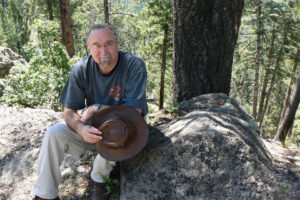
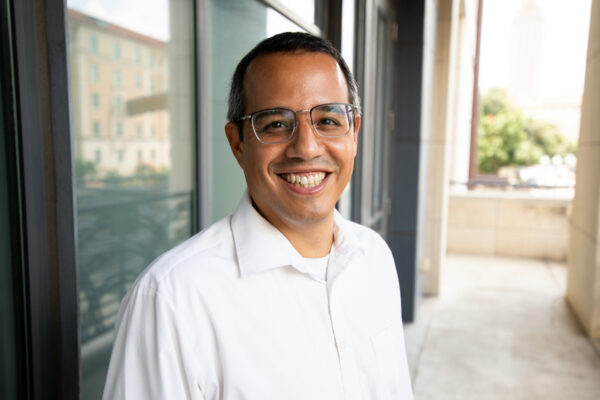
Cameron Strang, Ph.D. student in the Department of History.
Taking an innovative two-semester seminar in Atlantic history taught by Professors Jorge Cañizares-Esguerra and James Sidbury during his first year at the university was important to shaping Strang’s historical vision.
This story first appeared on the Department of History website.
“Along with a diverse class of bright and eager students, we had four all-star professors from UT and other institutions participating in each week’s discussions,” he says. “It was not only intellectually stimulating; it was fun.”
The visiting professors were Matt Childs, a Harrington Fellow and former student, and James Sweet, a visiting fellow at the university’s Institute for Historical Studies.
It was during this seminar that Strang began to engage with the historical questions that would ultimately become the basis for his dissertation. His research demonstrates that local knowledge in the southeast borderlands—lower Louisiana, Mississippi, and the Floridas—had a major impact on science and expansion in the early United States.
“Local science,” Strang says, “gave U.S. officials and men of science both practical and ideological tools for controlling and profiting from the southeast borderlands.”
A borderlands history of science provides a “convenient and fascinating” way to fuse the histories of American and Spanish imperial expansion, borderlands, the Caribbean and the broad-reaching and under-studied ways that science and scientific process has shaped history.
“Like a lot of Ph.D. students in the humanities,” Strang says, “I entered graduate school without the clearest notion of what it entailed, either in terms of commitment or challenges. It turns out that I like the challenges and, to at least some extent, even the competitive nature of academia.”
The history graduate program has a collaborative spirit that has allowed him to “embrace the competitive aspects of academia without losing sight of the cooperation, community, and mutual support that should, ultimately, be at its center,” he says.
Competing for grants and fellowships is an important part of graduate school, and Strang has had success in winning these competitions during his four years at the university. He has earned 12 fellowships from outside institutions, including awards from the National Science Foundation, the Library of Congress, the Robert H. Smith International Center for Jefferson Studies at Monticello, and the Huntington Library.
Most recently, the History Department selected him as its nominee for the university-wide Continuing Dissertation Fellowships competition, a prestigious award that would provide funding for Cameron’s final year of writing as he prepares to submit and defend his dissertation in spring 2013.