Archive for the ‘biology’ Category
Friday, May 7, 2010


It’s been 44 years since “Fantastic Voyage.” That’s the movie in which Raquel Welch and a team of scientists were shrunk to a microscopic size and injected into a man’s bloodstream.
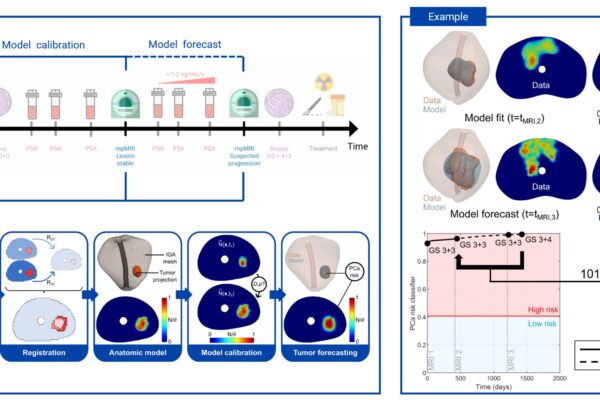
We still can’t do that, but we can model what’s happening inside the human body–and other living things–using powerful computers like the ones at the Texas Advanced Computing Center.
The work of some of the researchers who use the center’s resources to study biology is highlighted on the TACC website.
The scientists
Read More …
Tags: biology, computational biology, Fantastic Voyage, health, modeling, supercomputer, TACC
By Tim Green
Published at 11:37 AM |
No Comments
Wednesday, April 14, 2010
Janet Walkow, , director of the College of Pharmacy Drug Dynamics Institute, will work with the Dell Pediatric Research Institute.
Some University of Texas at Austin researchers are moving into brand new laboratories at the Dell Pediatric Research Center with the expressed aim of turning research into treatments for childhood health problems.
Nancy Neff, who handles public affairs for the College of Pharmacy and the Schools of Social Work and Nursing, talked to several of those researchers about their work in anticipation of
Read More …
Tags: children, dell, health care, pediatric, research, treatment
By Tim Green
Published at 2:12 PM |
No Comments
Tuesday, March 16, 2010
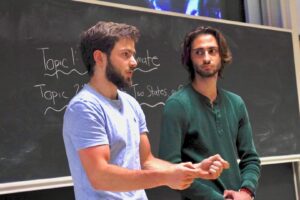
Scientist John Wallingford, left, and surgeon Tim George are teaming up.
John Wallingford and Tim George work at different ends of the biomedical-health-care spectrum.
Wallingford is a scientist doing basic research at The University of Texas at Austin. Using frogs and mice as models, he studies how embryos develop and what can go wrong in development.
George is a pediatric neuro-surgeon at Dell Children’s Medical Center of Central Texas. Among his patients are children with birth defects.
The scientist and the surgeon have teamed up to find
Read More …
Tags: birth defects, Dell Children's, John Wallingford, neural tube defects, spina bifida, Tim George, translational research
By Tim Green
Published at 8:00 AM |
No Comments
Monday, March 15, 2010
Elops smithi, a new species of ladyfish. Claudia R. Rocha, a graduate student at the Marine Research Institute, was part of the team making the case for its existence in Zootaxa.
Before you can have Further Findings, you have to have findings, or, as my colleagues in the College of Natural Sciences call it, Raw Science.
What that means is that they have posted summaries of research papers involving its faculty and links to the papers.
The first round of research in this
Read More …
Tags: College of Natural Sciences, Science, science journals, Virology, Zootaxa
By Tim Green
Published at 8:24 AM |
No Comments
Monday, March 1, 2010
Risto Miikklulainen
Part of The University of Texas at Austin’s role in a $25 million “evolution in action” project called BEACON involves a computer game.
This game was developed to research artificial intelligence and it shows evolution in action. The game is NERO, which stands for Neuro-Evolving Robotic Operatives. In the game, the characters evolve to improve their performance of tasks.
It’s based on the neural network research in the laboratory of Risto Miikkulainen, a professor in the Department of Computer Science and a
Read More …
Tags: artificial intelligence, BEACON, evolution, NERO, neural networks, neuro-evolving robotic operatives, Risto Miikkulainen
By Tim Green
Published at 11:30 AM |
No Comments
Wednesday, January 6, 2010
Janice Fischer
As a graduate student in biology, Janice Fischer had rotated through four laboratories and nothing had grabbed her imagination.
In the fifth lab, she found the fruit fly.
“That was it,” she says. “I wanted to stay there and, luckily, they let me.”
For 22 years, Fischer, a professor in the Section of Molecular Cell and Developmental Biology, has been working with the fruit fly, Drosophila melanogaster, as her model organism.
This is the first of a series of Further Findings posts
Read More …
Tags: angelman, biology, drosophila, fruit fly, genetics, genome, janice fischer, muller
By Tim Green
Published at 8:00 AM |
1 Comment
Thursday, December 31, 2009
John Wallingford
For this installment of University of Texas at Austin researchers on video, check out John Wallingford’s talk to the Council for the Advancement of Science Writing.
Wallingford, a biologist, studies how cells communicate in the early embryo. His CASW talk centers on cilia and its renewed importance.
Note Wallingford’s use of resources. He cites a paper written about cilia in the 1890s.
Find the video here http://www.youtube.com/watch?v=6S6i6DVW0LM.
Tags: biology, CASW, cells, cilia, embryo, John Wallingford
By Tim Green
Published at 9:00 AM |
No Comments
Friday, December 18, 2009
Why women have sex. Why some ants don’t. Is your online personality the real you? What do bats sing about to each other? Who’s that new meat-eater shaking up the dinosaur family tree? Do toddlers make their own grammar?
These are among the questions that University of Texas at Austin researchers answered in the fall 2009 semester.
Here’s a look back at what they found.
Women and sex: Let me count the whys
Challenging the idea that women’s sexual motivations are tied exclusively to
Read More …
Tags: ants, asexual, bats, Buss, butterflies, evolution, grammar, love songs, Meston, psychology, Sam Gosling, sex, species, toddlers, Women
By Tim Green
Published at 3:00 PM |
No Comments
Friday, October 16, 2009
Eric Pianka and Gisela Kaufmann–Photo by Carsten Orlt
Sometimes it pays to read those old magazines gathering dust in doctors’ offices. That turned out to be Eric Pianka’s version of being discovered by a talent scout.
Pianka, a biologist who holds the Denton A. Cooley Centennial Professorship at the University of Texas at Austin, is the expert guide in “Lizard Kings,” a part of the Nova series on PBS. It will be shown on KUT at 7 p.m. Oct. 20, 2009.
And it’s
Read More …
Tags: Australia, climate change, conservation, Eric Pianka, Gisela Kaufmann, Lizard Kings, lizards, monitor lizard, Nova, PBS
By Tim Green
Published at 2:54 PM |
No Comments
Friday, September 25, 2009
R. Dayne Mayfield
The people who use their brain to think ahead about donating their brains to science do R. Dayne Mayfield a big favor.
Mayfield, a researcher at the Waggoner Center for Addiction and Alcoholism Research, uses the brain tissue to study the genetic impact of alcohol on the brain.
READ MORE about ADDICTION research at www.utexas.edu on Oct. 5, 2009
The more he knows about the donors, the better the information obtained from the donors’ tissue.
The plan-ahead donors fill out a questionnaire detailing
Read More …
Tags: alcohol, alcoholism, brain donor, brain tissue, Tissue Resource Center, Waggoner Center
By Tim Green
Published at 10:54 AM |
1 Comment