Archive for the ‘Uncategorized’ Category
Friday, May 22, 2009
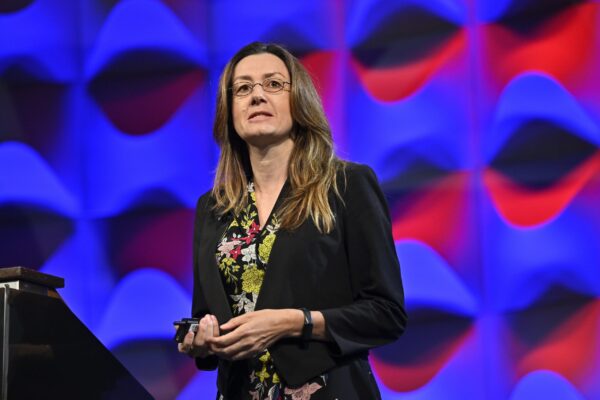
Richard Matzner, digs black holes
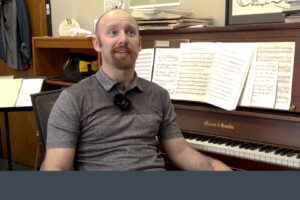
[caption id="attachment_585" align="alignright" width="300" caption="Pablo Munguia, digs pen shell clams"]
[/caption]Today, Further Findings points readers to two research stories–one in outer space and the other under the sea–posted elsewhere on The University of Texas at Austin Web site.
Aaron Dubrow, the science writer at the Texas Advanced Computing Center (TACC), writes about the research of Richard Matzner, an astrophysicist at the university.
Matzner uses TACC’s Ranger supercomputer to simulate binary black hole mergers and search for gravitational waves. The waves were
Read More …
Tags: black holes, communities, gravitational waves, habitat destruction, Marine Science Institute, Pablo Munguia, pen shells, Richard Matzner, Texas Advancec Computing Center
By Tim Green
Published at 10:08 AM |
No Comments
Tuesday, May 5, 2009
Linda Schele
[caption id="attachment_536" align="alignright" width="175" caption="David Stuart"]
[/caption]Two University of Texas at Austin researchers are prominently featured in “Cracking the Maya Code,” an episode of Nova on PBS. The episode, first aired in April 2008, is rebroadcast at 7 p.m. May 5 on KLRU. It also is available online at Hulu.com.
David Stuart\'s Take Five video
The program follows the efforts of archeologists who for more than a century tried to figure out the meaning of symbols, called glyphs, inscribed in Maya ruins
Read More …
Tags: art history, Cracking the Maya code, David Stuart, Linda Schele, Maya, Nova, Palenque
By Tim Green
Published at 11:48 AM |
2 Comments
Wednesday, April 29, 2009
Visualization of a large jet fuel pool fire in a cross flow that is heating a suspended cylindrical container.
A story on the Web site of the Texas Advanced Computing Center (TACC) is about research to model explosions. It highlights the work of Charles Wright, a chemistry professor at the University of Utah, who is using TACC’s Ranger computer.
Experiments on explosions can be tricky, but they’re no piece of cake to model on a computer. The story explains: Explosions are particularly challenging
Read More …
Tags: Charles Wright, chemistry, engineering, explosions, modeling, physics, Ranger
By Tim Green
Published at 8:49 AM |
No Comments
Thursday, April 23, 2009
Conception of laser-generated filaments for lightning control.
When something unexpected happened during Aaron Bernstein’s laser experiment in ionization, he veered from the original experiment, followed the surprise and found something he calls “pretty darn cool.”
What Bernstein, a scientist in the Department of Physics at The University of Texas at Austin, and his colleagues found was that they could cross two laser beams in ambient laboratory air and transfer seven percent of the energy of one of the beams to the other.
Read More …
Tags: laser, lightning, optical filaments, physics, pollution, remote sensing
By Tim Green
Published at 10:15 AM |
No Comments
Monday, April 6, 2009
Steven Weinberg
Scientists search for new knowledge. They want to find out how things work—from inside cells to the edge of the universe.
So they’re disappointed when they don’t find what they expected or nothing at all, when nature throws them a curve when they expected a fastball.
Not necessarily.
Steven Weinberg, the Nobel Prize physicist at The University of Texas at Austin, hopes that the Large Hadron Collider (LHC) strikes out.
Basically, he said, what’s the fun in finding what you’re looking for? It’s
Read More …
Tags: Arizona State University, Brian Green, discovery, eureka, Higgs, Ira Flatow, Large Hadron Collider, nature, Origins, Science Friday, Steven Weinberg. Lawrence Krauss. Michael Turner
By Tim Green
Published at 9:02 AM |
1 Comment
Friday, April 3, 2009
Marie Monfils
Marie Monfils studies a basic emotion, fear, in a basic model system, rodents.
But the assistant professor of psychology hopes her research will lead to effective therapies for complex phobias and anxiety disorders that affect people.
“To me that’s a big deal,” she said. “I’m always cautious in saying what I do has direct translational relevance, but I think it’s a step in the right direction.”
The “it” she referred to is her paper published April 2 in Science Express. She reported that
Read More …
Tags: conditioned stimulus, daniela schiller, fear, fear response, labile, liz phelps, Marie Monfils, memory, memory and learning, new york university, university of texas at austin
By Tim Green
Published at 9:00 AM |
No Comments
Monday, March 30, 2009
Dan Bolnick
The threespine stickleback is a fish biologists use as a model organism and have for about a century.
Dan Bolnick, an assistant professor in the Section of Integrative Biology, is a stickleback scientist who’s starting to use the fish in a new way to research relationships between organisms and parasites.
Bolnick’s work earned him selection as a Howard Hughes Medical Institute (HHMI) Early Career Scientist. John Wallingford, an associate professor of molecular cell and developmental biology, also was selected.
They are among 50
Read More …
Tags: Dan Bolnick, Howard Hughes Medical Institute, John Wallingford, model organism, Section of Integrative Biology, Section of molecular and cell biology, threespine stickleback, university of texas at austin
By Tim Green
Published at 11:15 AM |
1 Comment
Friday, March 6, 2009
LeeAnn Kahlor
Those tracking the Earth’s temperatures might want to make a notation of a heat spike in February 2009.
That’s when newspaper columnist George Will wrote about his skepticism on global warming and the role of humans. He cited scientific data that he said supported his conclusions. Others said that Will misread, misinterpreted and mischaracterized the data, not least of all the scientists who compiled that data. More about the ruckus can be found at http://ksjtracker.mit.edu/?p=8707.
Argument, some of it heated, ensued in newspapers
Read More …
Tags: climate change, department of advertising and public relations, george will, global warming, global warmking, LeeAnn Kahlor, Science Communication, Sonny Rosenthal, university of texas at austin
By Tim Green
Published at 2:00 PM |
No Comments
Thursday, March 5, 2009
Recovery Act Limited Competition: Extramural Research Facilities Improvement Program
http://grants.nih.gov/grants/guide/rfa-files/RFA-RR-09-008.html
Deadlines: May 6, 2009 (projects between $2M and $5M); June 17, 2009 (projects between $10M and $15M), July 17, 2009 (projects between $5M and $10M)
Recovery Act Limited Competition: Core Facility Renovation, Repair, and Improvement
http://grants.nih.gov/grants/guide/rfa-files/RFA-RR-09-007.html
Deadline: Sept. 17, 2009
Recovery Act Limited Competition: High-End Instrumentation Grant Program
http://grants.nih.gov/grants/guide/pa-files/PAR-09-118.html
Deadline: Sept. 17, 2009
By Tim Green
Published at 4:56 PM |
No Comments
Tuesday, March 3, 2009
“Murder and math. What could be better?”
That’s how Michael Starbird, professor of mathematics, describes his appreciation for the CBS show “Numb3rs.”
Starbird and “Numb3rs” (on CBS at 9 p.m. Fridays) came together at a recent Science Study Break, a series that connects the science in movies and television shows to real science. Past lectures include anthropologist John Kappelman on “Bones” and biologist David Hillis on “CSI.”
“Numb3rs,” in its fifth season, chronicles the adventures of Charles Eppes, a math genius and professor
Read More …
Tags: Add new tag, Life Sciences Library, mathematics, Michael Starbird, Numb3rs, random, randomness, Science Study Break
By Tim Green
Published at 1:36 PM |
No Comments