Web Historical Disclaimer:

This is a historical page and is no longer maintained. Read our Web history statement for more information.


spacer
DISCOVERY MAGAZINE

spacer

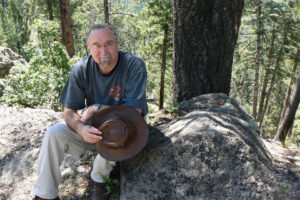
Dr. Robert A. Divine,
who has taught at The University of Texas at Austin since 1954, is the George W. Littlefield Professor in American History.


Roosevelt the Pragmatist


How We Won the War and Lost the Peace," an impressive article by William Bullitt, the U.S. ambassador to Russia during World War II, was published in Life magazine in August, 1948. Appearing at the time of the Berlin blockade, the Bullitt article charged Franklin Roosevelt with responsibility for the Cold War with the Soviet Union. Bullitt recalled how he had presented Roosevelt with a lengthy memorandum in 1942 warning against postwar Soviet expansion and how the President had dismissed Bullitt's analysis, saying, "I just have a hunch that Stalin is not that kind of man." "I think if I give him everything I possibly can and ask nothing from him in return," the President continued,"noblesse oblige, he won't try to annex anything and will work with me for a world of democracy and peace."

The stereotype that Bullitt presented in 1948 of a naive and trusting politician who thought he could play a hunch and use his fabled charm to win Joseph Stalin over to a peaceful postwar policy has proved extraordinarily durable. Historians have succeeded in discrediting the partisan charges made at the time of the 1952 election that Roosevelt betrayed China and Eastern Europe to communism at the Yalta Conference. Few today believe that Roosevelt was guilty of treachery. Yet the idea that he was duped by Stalin persists in the popular mind, and a number of historians conclude that Roosevelt's reliance on personal diplomacy and his willingness to go more than halfway in negotiating with Stalin undermined America's wartime relations with the Soviet Union and made the Cold War inevitable.

While Roosevelt's policy was unsuccessful, it was neither as naive nor as unwise as these historians suggest. Roosevelt attempted to pursue a realistic policy toward Russia. He realized that Woodrow Wilson had failed disastrously during and after World War I by taking far too rigid and moralistic a position toward the Bolsheviks. Determined not to repeat Wilson's mistake, Roosevelt strove for a flexible and conciliatory policy which would enable two great nations to achieve a viable and, it was hoped, friendly relationship. He was not successful, but he made a valiant effort which deserves to be understood rather than ridiculed.

Critics of Roosevelt's diplomacy levy their most serious charges at the President's wartime relations with the Soviet Union. Echoing William Bullitt's original attack, they portray the President as a naive domestic politician who failed to grasp the ruthless and aggressive nature of the Soviet regime. These judgments, reflecting essentially a Cold War disenchantment with the results of World War II, need to be re-examined. From Pearl Harbor to Yalta, Roosevelt pursued what he believed to be a realistic policy toward the Soviet Union, directed toward one end-the defeat of the Axis nations in the shortest possible time. He concentrated exclusively on the war effort, and his policy toward the Soviet Union reflected that single-minded determination.

In order to achieve a more balanced appraisal of Roosevelt's diplomacy, let us explore two major episodes in Soviet-American wartime relations and evaluate them in terms of Roosevelt's avowed objective of maintaining Big Three unity. The first episode occurred in the early months of 1942 and encompassed the twin issues of postwar territorial adjustment and a second front in Europe. The prevailing interpretation views Roosevelt as offering an early second front to Russia to induce Stalin to give up territorial demands. Roosevelt was never concerned enough about Soviet boundary claims to base his military strategy on such a consideration; instead, his premature offer of a second front stemmed from his desire to encourage Russia at a critical moment in the course of the war.

The territorial issue arose in December, 1941, when Anthony Eden went to Moscow in an effort to reach an accord with the Soviet Union on the conduct of the war. When Eden arrived in mid-December, the Soviet leaders proposed a treaty of alliance that not only provided for wartime cooperation but contained a secret protocol guaranteeing the Russian frontier as it stood at the time of Hitler's invasion in June, 1941. Stalin wanted British consent to the incorporation of the Baltic States within the Soviet Union. He was willing to postpone a definite agreement on the Polish boundary though he indicated that Russia would insist on the Curzon line, a boundary Britain had proposed at the end of World War I. Eden evaded Stalin's demands, finally agreeing to inform his government of the Russian position and to consult with the United States before proceeding further.

On February 4, Cordell Hull sent the President a long memorandum summarizing the whole issue. He admitted that concession to Stalin's demands might lead to a temporary improvement in relations with the Soviets, but the long-run effect would be disastrous, since it would encourage Stalin "to resort to similar tactics later in order to obtain further and more far-reaching demands." Above all, Hull warned that recognition of Soviet control of the Baltic States would betray the principle of self-determination and thus "destroy the meaning of one of the important clauses of the Atlantic Charter."

Hull's arguments apparently had little effect on the President, for by March he was wavering on the territorial issue. On the last day of the month, the British ambassador in Washington informed acting Secretary of State Sumner Welles that his government had decided to sign the treaty with Russia "as a political substitute for material military assistance." On April 1, Welles informed the ambassador that Roosevelt was concerned about the fate of the Baltic peoples who might not wish to live under Soviet rule and had suggested that a clause be added to the treaty permitting the Lithuanians, Latvians, Estonians, and Finns affected "to leave those territories with their properties and belongings." Though the Russians rejected this proposal when Eden tried to add it to the treaty, the very fact that Roosevelt suggested it was a sign of his willingness to accept the Soviet territorial demands. Thus, confronted with the British plea based on military expediency, Roosevelt disregarded Hull's advice and implicitly sanctioned the Anglo-Soviet treaty.

On the very day Roosevelt gave in on the territorial issue, his military advisers secured his approval for a major change in American strategy. In Anglo-American staff conferences in early January, the two nations had agreed that a direct attack on the European continent was out of the question for the near future, and, as a result, the United States had agreed to British plans for a campaign in North Africa. American military planners, led by General George Marshall, decided by March that a cross-channel invasion was the most effective way to defeat Hitler, and they convinced Roosevelt that this operation could be launched in 1943, with the possibility of a small-scale landing on the continent in 1942 to secure a beachhead.

On April 8, General Marshall and Harry Hopkins traveled to England to sell the dubious British on this new strategic plan. In pressing for British approval, Hopkins stressed the American determination "to take great risks to relieve the Russian front." Hopkins then linked the cross-channel invasion with the Anglo-Soviet treaty, saying that while the President still did not approve of the territorial concessions, he believed "that in the last analysis it was a decision the British must make. I impressed on Eden," Hopkins reported, "as strongly as I could the President's belief that our main proposal here should take the heat off Russia's diplomatic demands upon England."

While some historians believe that Roosevelt had decided to offer the second front as a substitute for the Anglo-Soviet treaty, I disagree. It was Roosevelt's deep concern for extending aid to a hard-pressed Russia, not fear of an unfavorable Anglo-Soviet treaty, that motivated the President. On April 3, when Hopkins and Marshall were preparing for their trip to London, Roosevelt wrote Churchill, "Your people and mine demand the establishment of a front to draw off pressure on the Russians, and these peoples are wise enough to see that the Russians are killing more Germans and destroying more equipment than you and I put together." As soon as Churchill gave his consent to the new plan, Roosevelt wrote to Stalin, asking him to send Molotov and a top-ranking Russian general to Washington. "I have in mind a very important military proposal involving the utilization of our armed forces in a manner to relieve your critical western front," the President confided. "This objective carries great weight with me."

After some delay, Molotov left Moscow, stopping off first in London to conclude the long-delayed treaty with Britain. At the first meeting with Molotov, Eden held out on the territorial issue, stressing American opposition and the need for the three nations to work closely together. When Hull read a report of this meeting, he immediately drew up a very strongly worded memorandum telling the British that the United States could not remain silent if they signed a treaty with Russia recognizing the 1941 Soviet frontiers. Roosevelt approved this message, and it was sent to the American ambassador in England on May 22. Four days later, Molotov signed an alternate treaty put forward by Eden which provided for a twenty-year military alliance without reference to frontiers.

When Molotov arrived in the United States on May 29, the issue of the second front was uppermost in his mind. Molotov warned that unless England and the United States could establish a landing in Europe that would draw off forty German divisions, Hitler might succeed in destroying the Red Army. "Mr. Molotov declared his government wanted to know in frank terms what position we take on the question of a second front, and whether we were prepared to establish one," Roosevelt's interpreter noted. "He requested a straight answer." The President turned to General Marshall and asked if he could assure Stalin that the United States was preparing a second front. When Marshall replied, "Yes," Roosevelt told Molotov to inform Stalin that "we expect the formation of a second front this year."

In their final meeting on June 1, Molotov again pressed the President and received the same ambiguous answer, that Roosevelt "expected" to establish a second front in 1942. In private, his military advisers warned him against making an explicit promise in view of the great difficulties of supply and transportation. The public communique released on June 11 revealed the ambiguity of Roosevelt's "promise" by stating "In the course of the conversations full understanding was reached with regard to the urgent tasks of creating a second front in Europe in 1942." The Russians insisted that this meant a definite pledge for a cross-channel invasion by the fall, despite frequent American efforts to inform them of the obstacles to such an operation. Eventually, the United States and England were forced to substitute the North African campaign for a beachhead landing in 1942; the full cross-channel invasion did not come for another two years.

Poland provided an even more challenging test of Roosevelt's wartime policy toward the Soviet Union. There were two distinct aspects to the problem-the issue of territorial boundaries and the question of who would rule the country after the war. The territorial dispute stemmed from the Russian determination to retain that portion of prewar Poland which the Red Army had overrun in September, 1939. The Soviets argued that the annexation of this territory corresponded to the Curzon line. The Polish government in exile, with headquarters in London, refused to accept this Russian claim, insisting instead on the pre-September, 1939 frontier which ran far to the east. Despite efforts by the British to reconcile this dispute, the London Poles and the Russians failed to reach a settlement after the German invasion in 1941.

At the first meeting of the Big Three in Teheran in late 1943, Churchill brought up the boundary issue in an effort to reach an amicable solution. Stalin suggested that, in return for accepting the Curzon line, Poland should be compensated with a broad slice of German territory in the west reaching to the Oder River. Though Churchill refused to make a binding commitment, he indicated his willingness to press such a solution on the Polish exile government. Roosevelt did not take part in these discussions, but in a private meeting with Stalin he expressed general agreement on the Polish boundary deal, saying that he "would like to see the Eastern border moved further to the west and the Western moved even to the River Oder." The President then hastened to inform Stalin that he "could not publicly take part in any such agreement" because he did not wish to lose the votes of "six to seven million Americans of Polish extraction" in the 1944 election.

Roosevelt maintained his silence on this issue for the next year, thereby encouraging the London Poles to continue holding out for the 1939 frontier despite repeated pressure from Churchill to accept the Curzon line. After the election, however, the President told the Polish government that while he preferred to postpone all boundary issues until after the war, the United States "would offer no objection" to any agreement worked out by the Polish, British, and Russian governments. At Yalta, Roosevelt again let Churchill take the lead on the boundary issue. The British Prime Minister quickly consented to the Curzon line as the eastern border, with a few slight deviations in Poland's favor, but he fought hard against the Russian plan to push the western Polish boundary far into Germany beyond the Oder River.

Near the end of the conference, the three wartime leaders debated whether or not to make a public statement on Poland's frontiers. Roosevelt argued that he could not commit the United States on a territorial settlement prior to the postwar peace treaty, but Churchill and Stalin insisted that the world be informed of their agreement. Finally, Roosevelt accepted a statement which confirmed the Curzon Line as the eastern frontier but then ducked the issue of a specific western line with the cryptic sentence, "It is recognized that Poland must receive substantial accessions of territory in the North and West." In the long run, the President's reluctance to agree to a western boundary proved unfortunate. After the war, the Soviets simply turned over all the territory extending to the Western Neisse to Poland, driving out more than six million Germans. If Roosevelt had been willing to commit himself to a specific western boundary, he might have limited postwar Soviet influence in Central Europe and achieved a fairer territorial settlement.

Roosevelt was equally reluctant to deal forthrightly with the even more significant question of who would govern postwar Poland. This issue emerged in 1943, when the Polish government in London asked the International Red Cross to investigate German charges that the Soviets had murdered 10,000 Polish army officers at Katyn Forest. Stalin responded by severing relations with the exile regime, despite a personal plea from President Roosevelt, who once again referred to the several million Americans of Polish descent who would be offended by this step. In early 1944, Russian armies began moving into Polish territory, and in July the Soviets announced that a Committee of National Liberation, composed of Polish Communists with headquarters in Lublin, would be in charge of civil administration in the liberated areas of Poland. What Churchill feared the most, a Soviet move to dominate Poland through a puppet government, now seemed to be a reality.

Roosevelt gradually became involved in the Polish governmental issue in 1944. In June he met with Stanislaw Mikolajczyk, leader of the London Poles, but he offered him little encouragement, suggesting that he should drop the more militant anticommunists from his cabinet and go to Moscow to seek an agreement with the Russians. Reports that the Russians were about to recognize the Lublin Committee as the government of Poland finally led Roosevelt to write directly to Stalin. In a cable on December 16, the President asked the Soviet dictator to refrain from such a step until the Big Three could meet at Yalta. Stalin replied with a scathing denunciation of the London Poles and indicated that he considered recognition of the Lublin government essential for the conduct of the war against Germany.

Roosevelt made a final effort on December 30, requesting Stalin to wait and permit the people of Poland to choose their own government at the war's end. "I am more that ever convinced," Roosevelt wrote, "that when the three of us get together we can reach a solution of the Polish problem, and I therefore still hope that you can hold in abeyance until then the formal recognition of the Lublin Committee as a government of Poland." This plea went unheeded; the next day the Soviet Union recognized the Lublin Committee as the provisional government of Poland.

When the three leaders met at Yalta, the future government of Poland was a central issue in their discussions. Roosevelt put forth the American position, suggesting the creation of a new government "composed of representatives of the principal parties of Poland." The Russians countered with a stubborn insistence on the primacy of the Lublin government. Stalin stressed how vital it was for both the conduct of the war against Germany and future Russian security to have a friendly government in Poland. At most, he was willing only to permit the broadening of the Lublin group by the addition of a few other Polish leaders. The disagreement thus focused on the critical point of whether to accept the Lublin regime as the nucleus of the Polish government or simply to treat the Communist group as one of several political factions to be merged into an entirely new government for Poland.

Roosevelt expressed his views most clearly in a letter to Stalin on February 6. He began by expressing his concern over the disagreement on Poland, warning that the American people might take this as a sign of a break in the wartime alliance. "I am determined that there should be no breach between ourselves and the Soviet Union," Roosevelt declared. "Surely there is a way to reconcile our differences." The President hastened to add that the United States could not recognize the Lublin government, but he then suggested a compromise. Representatives from the Lublin government and two or three Polish leaders who spoke for "other elements of the Polish people" should come to Yalta. The Big Three would consult with them about forming a new provisional government which would include the Lublin group, democratic leaders from within Poland, and selected members of the London government. This interim government, the President concluded, would rule until free elections could be held "at the earliest possible date."

Though modified by subsequent debate, Roosevelt's proposal became the basis for the Yalta agreement on Poland. Unable to assemble a group of Polish leaders immediately, the Big Three decided to permit negotiations for the creation of the provisional government to take place in Moscow under the supervision of the Russian Foreign Minister and the British and American ambassadors. The crucial guideline for the composition of this regime read as follows: "The Provisional Government which is now functioning in Poland should therefore be reorganized on a broader democratic basis with the inclusion of democratic leaders from Poland itself and from Poles abroad." In addition, the agreement promised that the new provisional government would hold "free and unfettered elections as soon as possible" in which "all democratic and anti-Nazi parties" would be allowed to participate. There was, however, no provision for international supervision of future Polish elections.

Roosevelt apparently was pleased with the agreement, feeling that he had avoided the rift with Russia that he feared so much at the climax of the war. Yet in fact he had sown the seeds of a controversy that would ultimately destroy whatever chance there was for postwar accord with the Soviet Union. The ambiguous Polish agreement glossed over the vital question of whether Poland was to be ruled by an entirely new government or by a just slightly reorganized Lublin regime. The negotiations in Moscow between the various Polish factions never took place.

Roosevelt tried desperately to break this stalemate in the last few weeks of his life. He warned Stalin on April 1 that any solution to the dilemma resulting in "the thinly disguised continuance" of the Lublin regime "would be unacceptable and would cause the people of the United States to regard the Yalta agreement as having failed." Stalin refused to heed the President's plea, replying on April 7 that the only way to break the deadlock was to accept the Lublin group as "the core" of the future Polish government. Five days later the President died, leaving this explosive issue as a legacy to his successor.

President Roosevelt's pragmatism proved to be his undoing. Striving above all else to maintain the wartime alliance as the basis for the future peace, he sought at Yalta to win time by pushing for an ambiguous and elusive paper agreement. Unlike Churchill, the President had little genuine concern for the fate of Poland; it was the unity of the Big Three that he wished to preserve. Yet he doomed that unity by his tactics of delay and evasion. The Russians accepted the Yalta agreement as a veiled American surrender of Poland to the Soviets. When Truman took office and decided to breathe new life into the Yalta agreement on Poland, the Soviets became embittered, feeling that the United States had abruptly reversed its stand. Truman's hard line failed to save Poland; instead it led to the break in Soviet-American relations. Poland, more than any other issue, gave rise to the Cold War, and Roosevelt, through his misleading diplomacy, must bear a share of the responsibility.

Franklin Roosevelt's claim to greatness must rest on his achievements in domestic affairs. His conduct of foreign policy never equaled his mastery of American politics and his ability to guide the nation through the perils of depression and war. Yet it is only by this comparison that Roosevelt suffers. Despite occasional lapses, his diplomacy served the nation well. He overcame both his own and the nation's isolationist inclination to bring a united America into the coalition that save the world from the danger of totalitarian conquest. His role in insuring the downfall of Adolf Hitler is alone enough to earn him a respected place in history.

The President failed in his further effort to establish the basis for an enduring peace, but no one has yet been able to show how anyone could have achieved that Utopian goal. A tough policy toward the Soviet Union might well have jeopardized the successful prosecution of the war against the Axis, and even if it did not, Truman's experience with a hard line toward the Soviets indicates that there was little to be gained by such tactics. Given the implacable nature of Soviet policy and the vast area overrun by the Red Army, it is hard to see how any American president could have denied Russia its postwar domination of Eastern Europe. At the very least, Roosevelt's attempt to seek a reasonable accommodation with the Russians threw the onus for the subsequent Cold War squarely upon Stalin.

In the final analysis, the American people were fortunate to have received as capable diplomatic leadership from Roosevelt as they did. The real difficulty lies in a political system which produces leaders on the basis of their political talents and domestic programs and then confronts them with the responsibility for international issues of enormous complexity. Franklin Roosevelt was not well equipped, either by experience or by temperament, to deal with the successive crises posed by Hitler's Germany and Stalin's Russia. Yet despite his limitations, he met these challenges boldly, playing a key role in ending the Nazi tyranny and making a valiant if unsuccessful effort to avert the Cold War.


HOME | | | NEWS | FACTS | ON CAMPUS | DISCOVERY | ABOUT O P A

August 22, 1997
Comments or suggestions to utopa@www.utexas.edu
Copyright © 1997 Office of Public Affairs
at The University of Texas at Austin