Green Fee CommitteeGreen Fee Logo

A student majority Green Fee Committee (GFC) has been established to solicit, review and award funds for environmental service related projects on campus. The green fee will be collected with tuition beginning in Fall 2011 through Summer, 2016. The green fee is $5.00 per long semester and $2.50 for the summer session.

Please use this site to learn more about the history of the green fee [pdf], timeline and upcoming deadlines, the GFC structure and by-laws [pdf], how you can participate as a GFC member, and how you can submit a proposal for green fee funding.

[Note: PDFs require Adobe® Reader® or compatible software]

If you are a current grantee and need to amend your budget, scope, or project timeline, please use this Project Amendment Form [MS Word;.docx] and Budget Sheet [MS Excel; .xlsx].

Grants & Research Projects 2013-2014

The Green Fee Committee proudly announces the grant recipients for 2013-2014!

Project Grants

Proposal Title Abstract Grant
Improving Stormwater Quality with Bioretention Gardens Grant will support the installation of bioretention gardens along 23rd and Trinity. Bioretention gardens purify water from rainfall events that are contaminated by runoff pollution from impervious cover such as streets and parking lots. The garden will provide aesthetic as well as ecological benefits to Waller Creek and the university. $56,348.00
Engagement Dashboard - Battle Hall Pilot An online web-based sustainability “dashboard” will facilitate student and visitor engagement paired with a physical kiosk piloted in Battle Hall. The kiosk and dashboard will develop the history, culture, efficiency, and ecology of UT’s buildings. This project aims to educate and engage more students on sustainability issues surrounding The University of Texas and its specific buildings. $45,627.00
Solar Powered Kiosk and Study Area (SURGe) With the first solar charging station project (original grant in 11-12) nearly complete as of May 2013, this project aims to create a similar solar powered study area. Solar panels will comprise the roof of the station with outlets, seats, and a workspace under the canopy. Students will be engaged with developing educational installations on and around the station. $51,000.00
Benefit-Cost Analysis of Reduced Ventilation in Lab Bldg Ventilation in labs consumes large amounts of energy. This project aims to reduce the amount of air exchangers in an effort to save money and energy in the BME building. The analysis will also consist of analyzing the air quality in the BME building due to the reduction of ventilators. $50,000.00
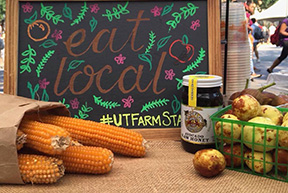
MicroFarm Year III The MicroFarm grows organic vegetables on Leona St near the Child Development Center, and teaches these methods to students who are interested. Through outreach and Saturday community involvement events, the MicroFarm community has grown, and another year of funding has been granted to support student leadership positions and necessary supplies. $15,000.00
University Health Services - Medical Waste University Health Services manages large amounts of medical waste. This project will aim to reduce the amount of waste produced by UHS in an effort to comply with their motto of “do no harm” consistent with health related services culture. The project creates a graduate assistant to audit the current waste stream and propose solutions. Phase two involves implementing a concrete plan to reduce waste and educating staff on new procedures. $40,000.00
Campus Environmental Center Year III As the largest environmental organization on campus for students, the CEC initiates and spearheads many sustainable projects on campus. The CEC also promotes on campus sustainability through outreach events, launching new programs, and sponsoring various campus-focused events. This year’s funding supports a Graduate Program Assistant, the Concho Community Garden, and expanding the Tailgate Recycling Program for football home games. $29,950.00
Composting Expansion These funds will be made available to food service locations on campus to expand their composting programs. The locations will be determined through collaborative meetings with the student grantee team and the food service administrators. $25,000.00
Sustainability Course Development and PLUS Awards This program will incentivize the development of more sustainability courses at UT. The grantee team will involve Peer Led Academic Studying (PLUS) to bolster the effectiveness of the program. $25,500.00
Orange Bike Project The Orange Bike Project rents bikes to students for a semester or a few days at a time. The expansion of this project involves the acquisition of 15-25 new bikes as well as more equipment for the community bike shop. The Orange Bike Project also offers a shop in the Guadalupe Garage where the UT community can fix their bikes. The Green Fee will also assist with outreach to the entire University community through social media and direct contact with faculty and classes.   $28,000.00
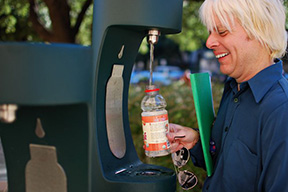
Exterior Water Fountains (SG) Water fountains are present inside all buildings but none are available outside. This project aims to create two outdoor water fountains in an effort to reduce the amount of disposable plastic water bottles and better hydrate the UT community. The Green Fee will cost-share the installation with Campus Planning & Facilities Management. $15,000.00
Texas City Lab The Green Fee will support an exploratory, concept development year in the Center for Sustainable Development. Patterned after a similar program in Oregon, the City Lab would engage classes and individual students and faculty in addressing a variety of challenges for Texas cities, focusing on a different city each year. The City Lab offers the potential to develop dozens of new classes, internship opportunities, and research projects. $21,625.00
Fryer Waste to Fueling Wheels (Biodiesel) UT produces hundreds of gallons of waste food oil weekly. This project proposes a student-led food-oil to biodiesel recycling program with a report on the program’s outcomes after one  year. $15,000.00
Chemical Lab Waste Reduction The labs in Welch produce large amounts of waste. This project aims to reduce the amount of trash accumulated and sent to landfills by recycling empty steel drums, formerly used to hold chemicals. The plan involves the use of a drum crusher to compact the drums which are currently thrown away due to their awkward size. $15,000.00
UT-each Outreach Year III Building upon the success of the previous two years of UTeach sustainability field trips, this funding will continue the offering of field trips to K-12 students in Austin. The field trip gives students a tour of UT and introduces them to research and facilities on campus in an effort to instill a passion and understanding for sustainability in the minds of young people. $9,176.00
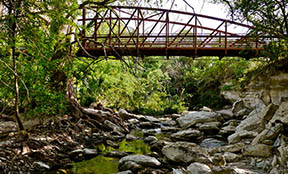
Waller Creek Awareness Waller Creek runs through UT and has undergone significant beautification processes through the Green Fee Program. This project aims to keep the focus on Waller Creek through volunteer opportunities at the creek. Student involvement will be incentivized through prizes and entertaining events. $4,365.00
Green Film Competition A Green Film Competition will be held amongst UT students. The winner of the competition will win an award as well as have their video featured in various campus sustainability outlets. $7,750.00
Green Greeks UT Greek Life represents just over 10% of the UT student body. This project supports a Greek community sustainability ambassador, who will organize competitions and work directly with Greek organizations to develop individual sustainability plans. $10,000.00
Battery Recycling in RLM The project will start a pilot battery recycling initiative based out of the Robert Lee Moore building. The plan will place non-flammable recycle bins and supplementary posters around the RLM to promote battery recycling. $7,145.00
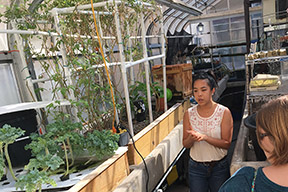
Irrigation Learning Lab at UT MicroFarm This project aims to create a detailed study of the water use of the Leona St. MicroFarm. Through this research on different irrigation methods, the MicroFarm will discover how to use less water, and data on irrigation methods will become available to all interested parties. $7,105.00
Liberal Arts Council - CLA Bottle Fillers This project will fund water bottle fillers on water fountains in the new Liberal Arts building. $5,290.00
Food Recovery Network The Food Recovery Network is a national organization that fights hunger by feeding the hungry with left-over food from restaurants and cafeterias. The UT chapter has seen a lot of growth in the 2012-2013 year and plans to expand with a large commercial refrigerator as well as a scale, trays, and lids. $3,500.00
Bat House at Concho Community Garden A bat house will be built at the Concho Community Garden, which will provide alternate housing for bats on campus as well as educate the university on the ecological role of bats in Austin.  $3,007.00
SEC E-Waste Recycling The Student Engineering Counsel (SEC) hosts an annual electronic recycling drive. SEC recently switched from Goodwill to Liquis Inc. to recycle a broader range of materials. Funds for this project go towards paying Liquis for their recycling services as well as proper marketing for the event. $3,000.00
School of Information Water Bottles This project will fund two EZH2O bottle filling stations on the current drinking fountains on the first floor of the UT School of Information to encourage the use of reusable bottles. $2,500.00
LBJ Green Society Composting The Green Society promotes the awareness of sustainable, environmentally friendly practices on and off campus among LBJ students, and implemented the Green Dining Program in 2011. This program is funded by the Green Fee and composts all waste generated from weekly lunch and learn meetings. $1,000.00

 
Research Grants

New in 2013, students with faculty and departmental support applied for small grants to directly support their research. Graduates were eligible for $5,000 and undergraduates for $2500.

Proposal Title Abstract Grant
Applying Fungal Endophytes to Increase Drought Tolerance Research on the effects of different endophyte communities on plant drought tolerance will reveal information on new ways to increase drought tolerance in plants. $5,000.00
Piezoelectricity Generation from Walking By using piezoelectric crystals, energy can be produced from walking along a surface. The piezoelectric crystals compress, which generate electrical energy. This project develops a test surface with hope for larger scale implementation in an effort to generate a new form of green energy. $2,500.00
Rainwater Recapture for Potable Use By researching the feasibility of rainwater harvesting on various UT buildings, this research will lead UT closer to understanding different ways in which to combat the extremely dry climate of Texas. $5,000.00
Biodiesel Assessment This research examines the food oil policies at UT and will develop a recommendation on possible uses for used oil and food waster. This research will take us one step closer to effectively implementing biodiesel through UT waste. $5,000.00
Evolution of Waller Creek Storm Water Quality Waller Creek is a key ecological feature of UT, but also contains lots of pollution. Research will be done to examine how pollutants travel to Waller Creek from the UT campus area specifically, and which sections are more or less polluted during rain events and during dry times. $5,000.00


Green Fee Proposal Application - Request for Proposals September 1-October 1, 2013

The UT Austin Green Fee Committee will accept project and research proposals between September 1 and October 1 of 2013. Prospective applicants should download either of the two Instruction Booklets and the Budget Sheet. All applications are due on or before October 1, 2013.

  • 2013 Project Application Instruction Booklet [pdf]
    All students, staff, and faculty may submit ideas for projects using this application. The information booklet will guide you in writing, assembling, and submitting your application materials.
  • 2013 Research Grant Instruction Booklet [pdf]
    Current students are eligible to request Green Fee funding for their sustainability-related research. All guidelines for eligibility, and assembling and submitting the application are in this booklet.
  • 2013 Budget Sheet [MS Excel; .xlsx]
    Required for all Green Fee projects.

All current students, faculty, and staff are eligible to submit ideas. Attending a workshop is strongly recommended (dates and times to be announced in August 2013). Questions may be addressed to greenfee@austin.utexas.edu.


2012-13 Green Fee Projects

Here are a few projects that have recently been featured in various media. Contact us directly if you’d like to get involved or learn more about a given project. See the full list of projects with grant amounts [pdf].

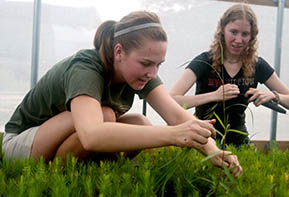
Students working at the microfarm

The Leona MicroFarm, UT Austin's second student-run community garden, hosted workdays this fall and plans to begin planting this spring. View their blog and learn more about their progress. You can also watch a video about the community gardens produced by the Green Fee and the Environmental Science Institute.


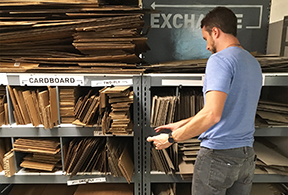
Foam recycling on Welch loading dock

As recently reported in the Daily Texan, the Department of Chemistry and Biochemistry is leading a pilot project to recycle hard-mold foam packaging from university labs. Pilot projects like this one help the university work out the logistics of a larger-scale recycling effort. Photo Credit: Chelsea Purghan.


Reports and Past Projects


Green Fee Committee Members

The membership of the GFC is established by Student Government resolution AR 7 (April, 2010) and consists of:

  • two students appointed by the Student Government,
  • one graduate student appointed by the Graduate Student Assembly,
  • one student appointed by the Campus Environmental Center,
  • two students at-large appointed by the Green Fee Committee,
  • one faculty member appointed by the Provost,
  • one staff member appointed by the Office of Student Affairs, and
  • one staff member appointed by University Operations.

The charge of the GFC is made jointly by the Vice President for Student Affairs, Dr. Juan Gonzalez and Vice President for University Operations, Dr. Patricia Clubb. The initial charge is derived from the state legislation, student government resolutions, and UT System guidance as follows:

The UT Austin Green Fee Committee is a student-majority committee charged with managing and reporting on: a) funds generated by an environmental services student fee that may be allocated toward efficiency improvement projects for existing infrastructure, environmental improvements through services related to recycling, energy efficiency and renewable energy, transportation, employment, product purchasing, planning and maintenance, and irrigation; b) toward matching funds already established for student internships, scholarships and research grants; and c) toward any other environmental initiative proposed by university students, faculty or staff.