The University of Texas at Austin- What Starts Here Changes the World
Services Navigation
  UT Home -> Tuition Home -> How Tuition is Set -> Tuition Policy Advisory Committee


How Tuition is Set

Tuition Policy Advisory Committee

Nov. 13, 2007—The Tuition Policy Advisory Committee (TPAC), a panel of students, faculty and administrators at The University of Texas at Austin, has recommended to President William Powers Jr., average increases in cost of attendance of $318 per semester in 2008-09 and $303 in 2009-10.

TPAC Recommends Two-Year Increases
for 2008-09, 2009-10

Download Adobe Reader

Attend Public Forums on TPAC Proposals

The TPAC will hold public forums at 3 p.m., Nov. 28 in the ACES Building, Avaya Auditorium, room 2.302, and 4 p.m., Nov. 29 in the Hogg Auditorium, and will make presentations to Student Government and the Graduate Student Assembly on Nov. 27 and the Senate of College Councils on Nov. 29.

View TPAC Presentations

View Nov. 28 and Nov. 29 TPAC presentations from public forums on tuition proposals [PowerPoint].

Share Feedback with TPAC Online

Your comments will help shape future information available on the Web site. Share feedback now.

Funds from the increases will be used to support student services, university-wide core academic needs, and activities and programs in the university's colleges and schools. They will support academic initiatives, merit salary increases for faculty and staff, facilities capital projects, and repair and renovation of existing buildings.

Included in the proposal is a financial aid package, the UT Grant Program, aimed at mitigating increased tuition costs for lower-income families. The aid program covers families in annual income ranges from $0 to $80,000, and with this program those in the $0 to $40,000 range will be fully covered.

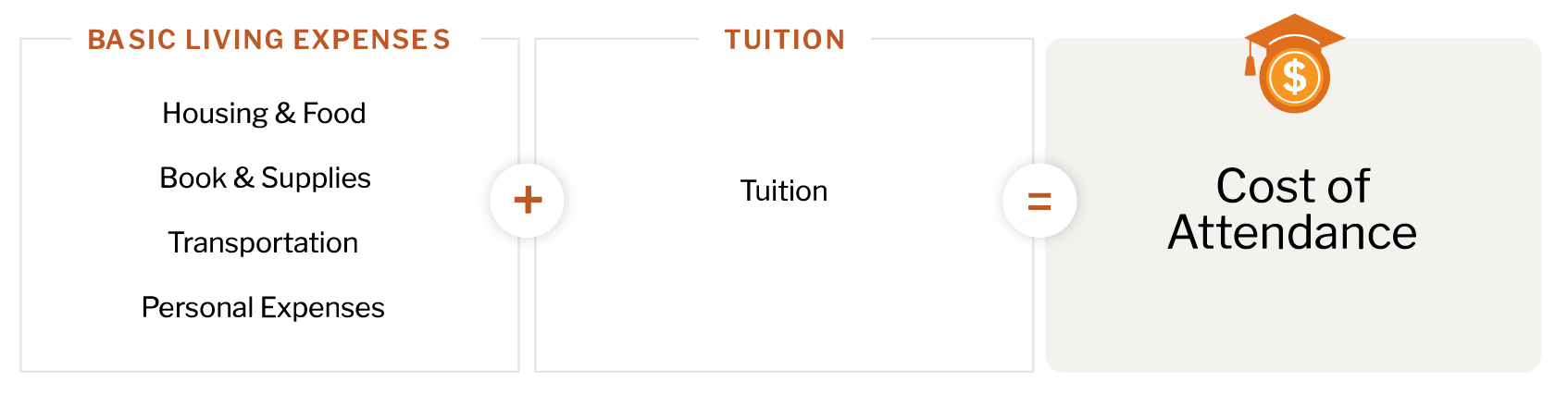
Costs in the university's colleges and schools will vary. For example, a typical undergraduate in the College of Liberal Arts would pay $4,167 per semester under the proposal. An undergraduate in the College of Natural Sciences would pay $4,330. The University of Texas at Austin combines tuition and fees, providing families with one total cost of attendance. Some institutions charge tuition, then add on costs through separate fees.

The TPAC noted that lack of funding from the state has placed a greater burden on tuition income to support university operations. State support for operational costs has increased only about 1.8 percent annually over the past decade, and that trend continued in the last legislative session.

These recommendations mark the second time the university has set the total cost of education for a two-year period to allow families to better plan for their children's education. The average increases for 2008-09 and 2009-10 are 7.8 percent and 6.9 percent. The average increases for the previous two-year period, 2006-07 and 2007-8, were 9.6 percent and 1.2 percent.

The proposed increases are aimed at providing $64.6 million in 2008-09 and $56.4 million in 2009-10 to support essential university functions, including the hiring of additional faculty to reduce the university student/faculty ratio and providing merit salary increases for faculty and staff. The increases in the cost of education will provide $33 million of that total in the first year and $31.7 million in the second.

The TPAC will hold public forums at 3 p.m., Nov. 28 in the ACES Building, Avaya Auditorium, room 2.302, and 4 p.m., Nov. 29 in the Hogg Auditorium, and will make presentations to Student Government and the Graduate Student Assembly on Nov. 27 and the Senate of College Councils on Nov. 29. The proposal will also be given to the executive committees of the Faculty Council and the Staff Council, the Texas Exes alumni organization and the university's Parents' Association. Powers is expected to submit his final tuition increase proposal to the University of Texas System Board of Regents in December.

___

More Resources


  Updated 2007 November 29
  Accessibility  •  Privacy
  Web site comments to Office of Public Affairs