World-Class Care in the Heart of Texas
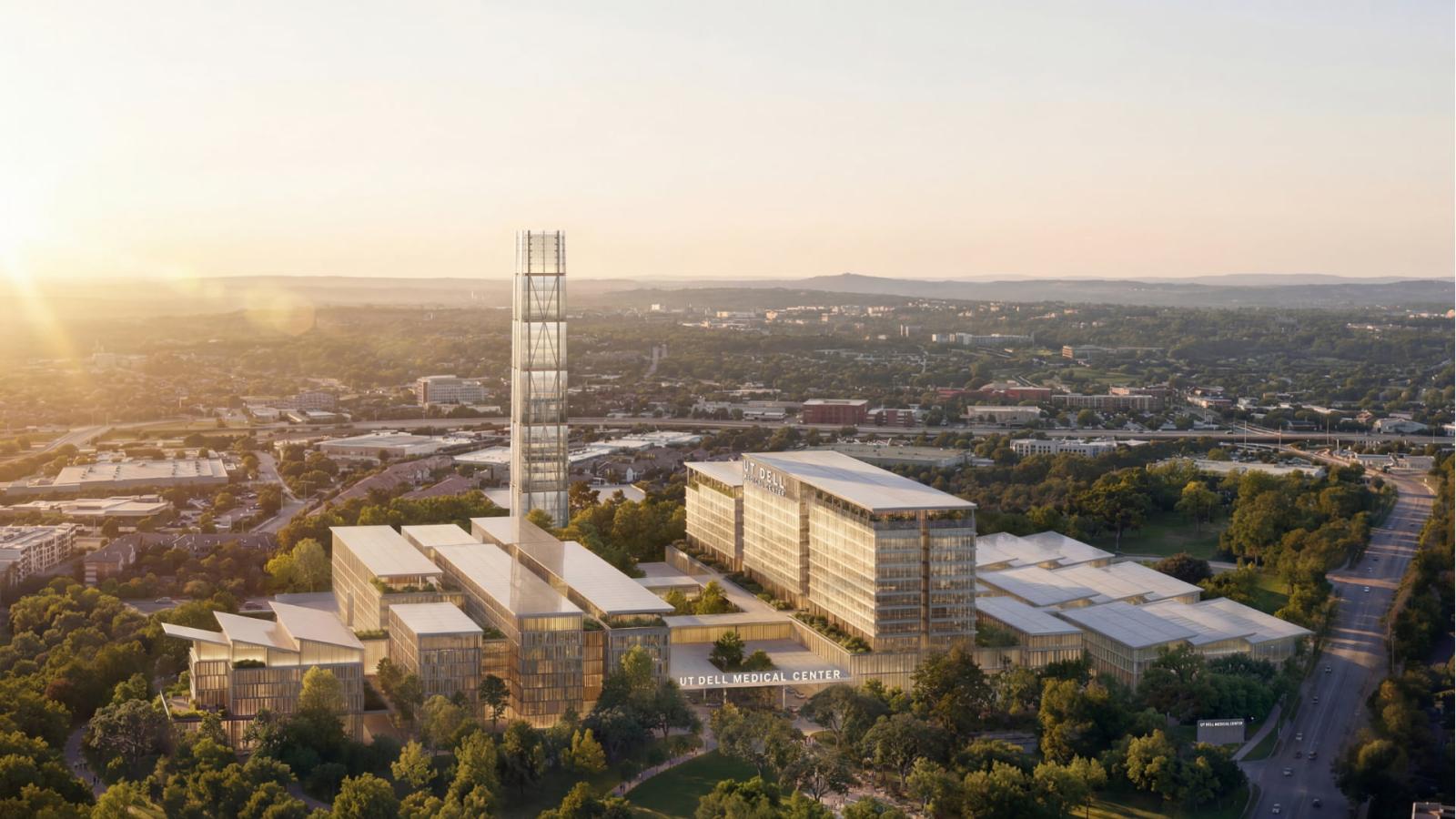
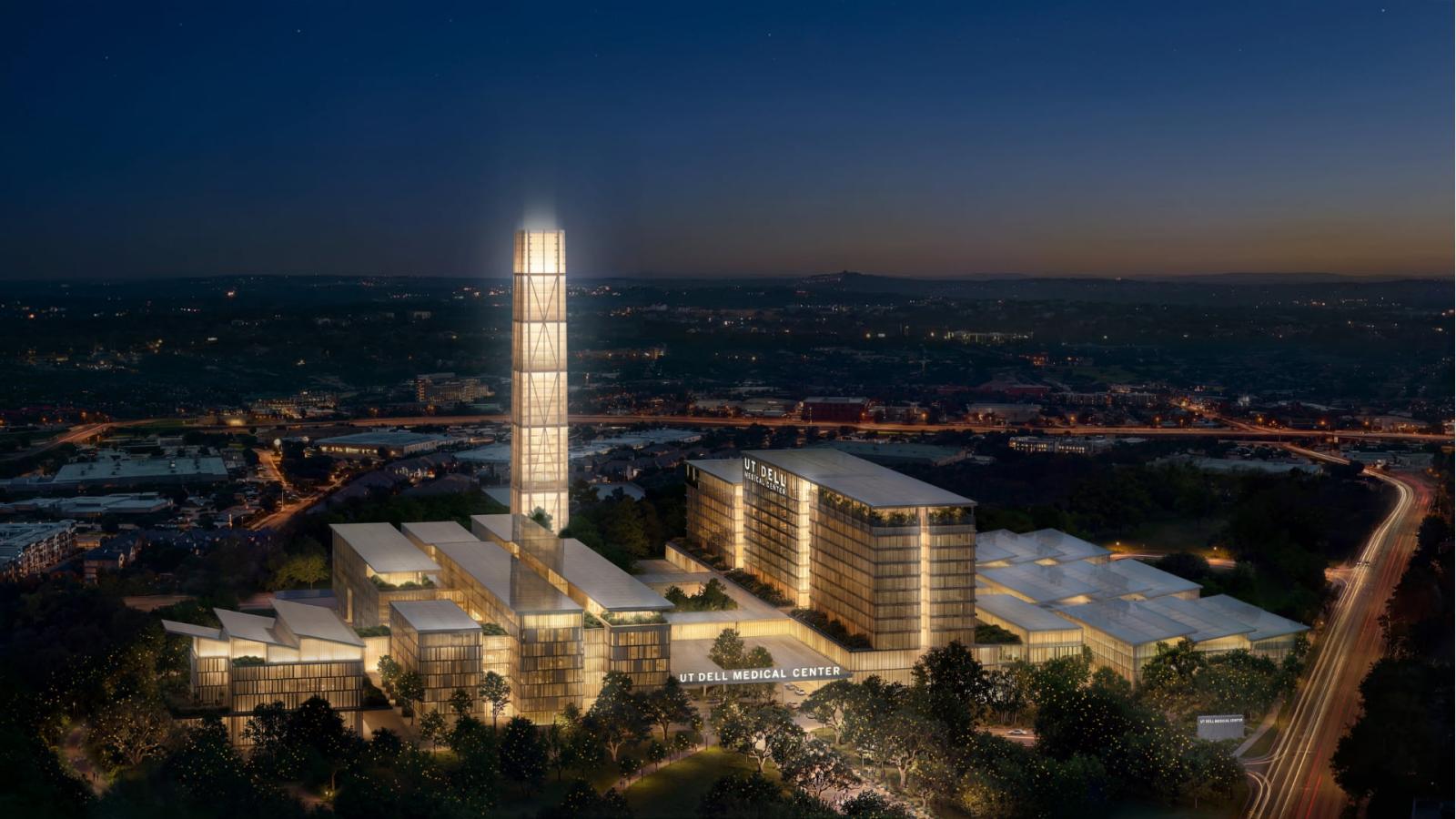
The UT Dell Medical Center, anchored by Dell Medical School, is an unprecedented opportunity that brings together state-of-the-art clinical care, cutting-edge research and next-generation medical education in the heart of Austin — which, until now, has been the largest U.S. city without an academic medical center.
Leveraging the newest commitment from the Michael & Susan Dell Foundation, a billion-dollar academic research enterprise and a historic integration of the world-renowned University of Texas MD Anderson Cancer Center, UT is building more than a hospital. We’re creating a seamless, digitally enabled health system — powered by data, AI and innovation — that transforms not only how care is delivered, but how people get and stay healthy.
A New Destination for Health
For too long, many Central Texans have had to travel elsewhere for complex care. That ends here. By expanding access to lifesaving treatments, attracting the brightest minds in medicine and research, and developing an integrated, person-centered care model, the UT Dell Medical Center will transform Austin into a premier destination for health.
Defining the Future, Together
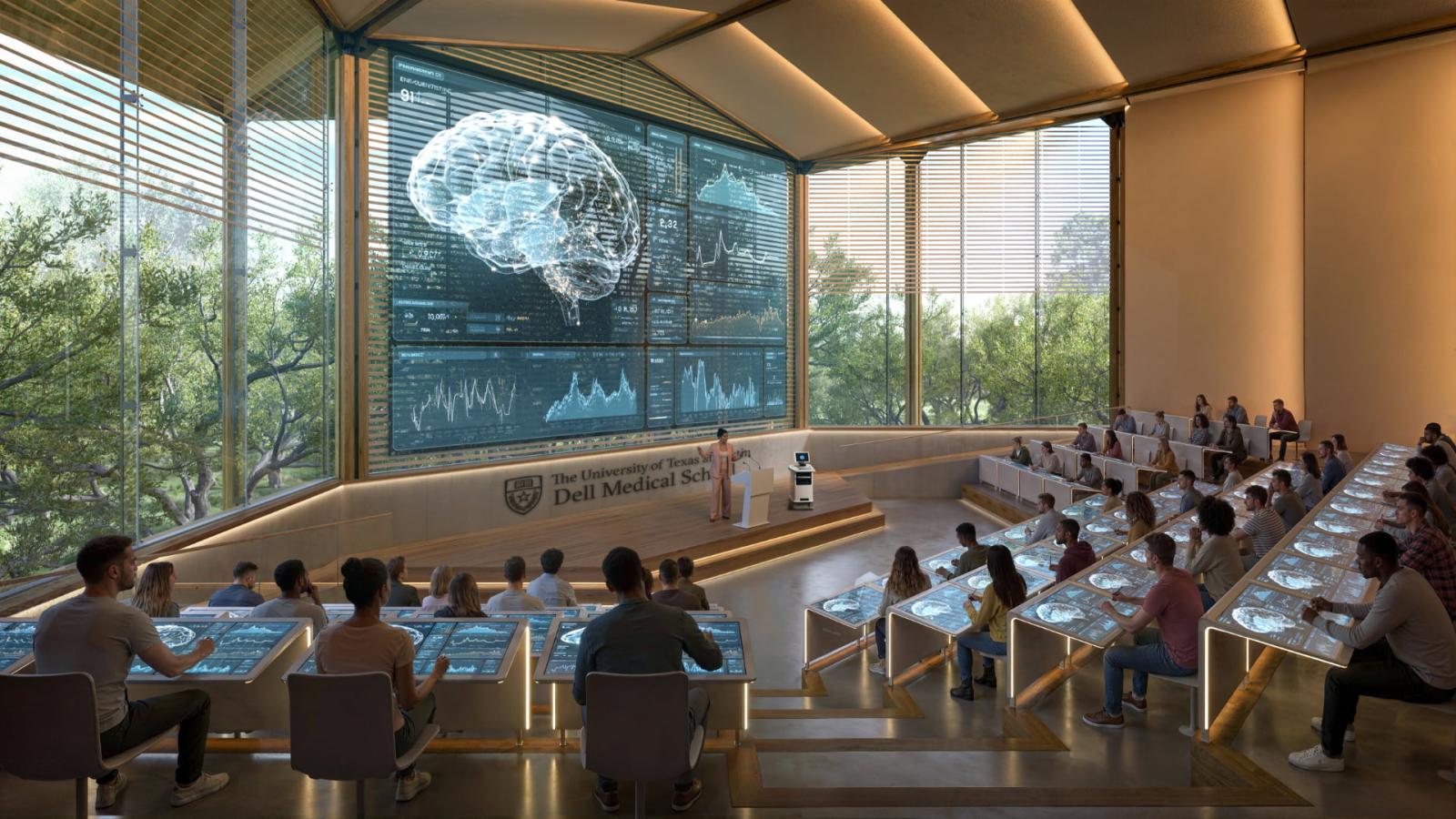
The UT Dell Medical Center unites the strengths of Dell Medical School, UT MD Anderson and UT’s top-ranked programs in engineering, nursing, pharmacy, business and more — creating a comprehensive health system that redefines what’s possible in health care. Here, physicians, researchers and students work side by side to turn bold ideas into breakthroughs that improve lives.

Dell Medical School
Dell Medical School, which welcomed its first class of students 10 years ago, is a driving force behind UT’s emerging academic health ecosystem — advancing patient care, pioneering research, and leading innovation in medical education and life sciences entrepreneurship.

UT Medicine
UT Medicine is a growing academic health system that brings together advanced discovery and compassionate, individualized care. Building on the foundation of UT Health Austin, UT Medicine reflects an integrated approach to care with a continued commitment to personalized, whole-person health.
“This is Texas doing what only Texas can do.
We have a generational opportunity to reimagine what it means to be a patient, to train future doctors and to innovate and build for a future shaped by the greatest acceleration in knowledge and technology in human history.
The potential for impact is bigger, even, than Texas. This changes the world.”– Claudia Lucchinetti, M.D.
Senior Vice President for Medical Affairs, UT Austin, and Dean, Dell Medical School
Health and Medicine News

Academic Medicine Raises the Bar for Pediatric Neuroscience Care in Austin
Less than a decade after its founding, the pediatric neuroscience program at Dell Children’s Medical Center, led by Dell Medical School faculty, is among the Top 25 in the U.S.

UT-Led Study Finds Dormant Cancer Cells Block Immune Cells To Disarm Immunotherapy
Targeting a signal released by dormant cancer cells could help overcome resistance to immunotherapy and improve cellular therapies for pancreatic cancer.

Experimental Drug Turns Cancer’s Favorite Fuel — Sugar — Against It
Researchers have developed a compound that delivers a one-two punch to cancer cells, exploiting their appetite for sugar while cutting off their backup fuel supply.